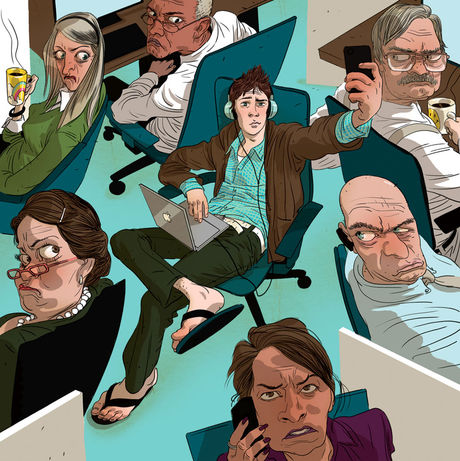
In Abby Ellin’s article, “The Beat Up Generation,” (2014), she suggests that the way the new millennial generation likes to do things clashes with the way the older baby boomers and gen-Xers like to do things. She supports this by citing different studies on the different generations and quoting different baby boomers and millennials regarding the other generation. Ellin wrote this article in order to inform people of the different ways the generations work and of the resentment it has caused. The intended audience of this piece was people studying psychology.
Being that we are all considered Millennials, It was a little hurtful reading the perception older individuals had about our generation; “... they are thought to be entitled, narcissistic, self-promotional, coddled, opinionated, whiny, and needy, especially at work (when they’re not complaining about unemployment, that is).”(Ellin Abby, “The Beat Up Generation”, 205). It seems that we come across in a very negative light to many older adults. However I feel that we are simply getting acclimated with the times.
Change is inevitable. This is one of the main reasons why there’s conflict between different generations. They all have opposing perspectives on life in general. The Baby Boomers generation views the Millennial generation as arrogant, narcissistic, and needy because of their behavior, especially in the work environment. There are many factors that contribute to the differences in behaviors and technology plays a big part in it. “They have a different value set-on global interconnectedness, the Internet, cell phones, instantly knowing what’s going on in the world,” (Ellin, 208). The new generation is more technically savvy while the older folks despise their obsession with smartphones, laptop, and etc. The Baby Boomers can’t keep up with the rapid shifts in technology, and this frustrates them. The differences in the upbringing results in the conflicting attitudes and personalities between them. The younger folks are more-needy because they are used to doing group works since grade school. “They’re sensitive to criticism and unable to work alone,” (Ellin 205). On the other hand, the older generation can work independently just fine. Another problem is that the Millennials do not cooperate to the traditional workplace hierarchies. They believed in earning respect rather than given. Due to their age and work experiences the Baby Boomers feel as if they should be respected.


